



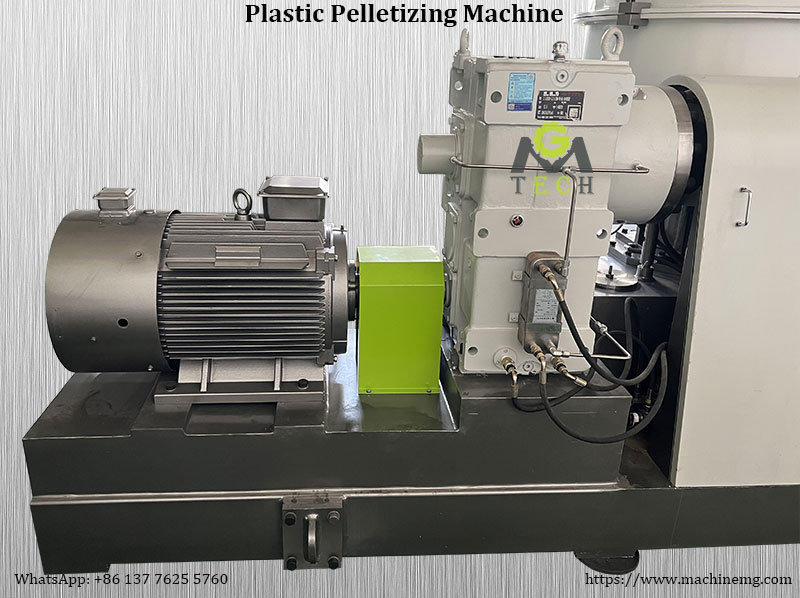

Single Stage Water Ring Pelletizer with Compactor: The Complete Recycling Solution for Plastic Film Waste
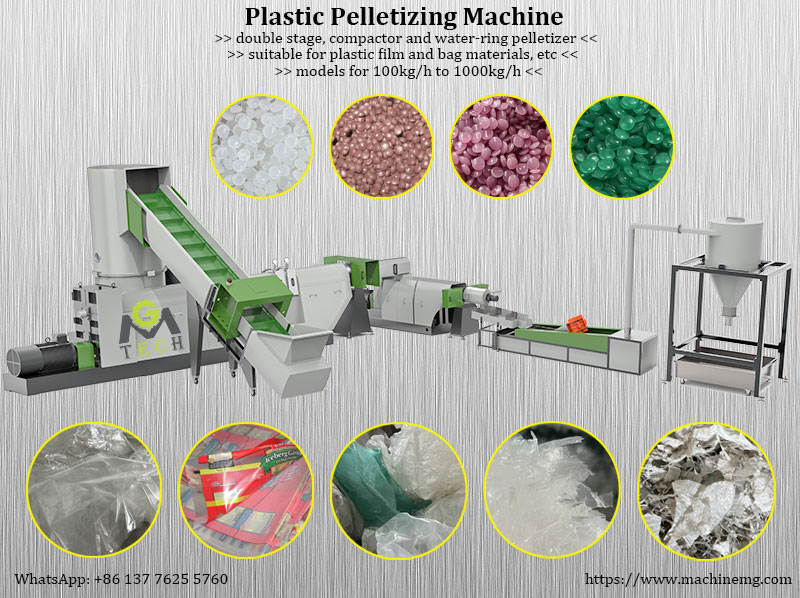
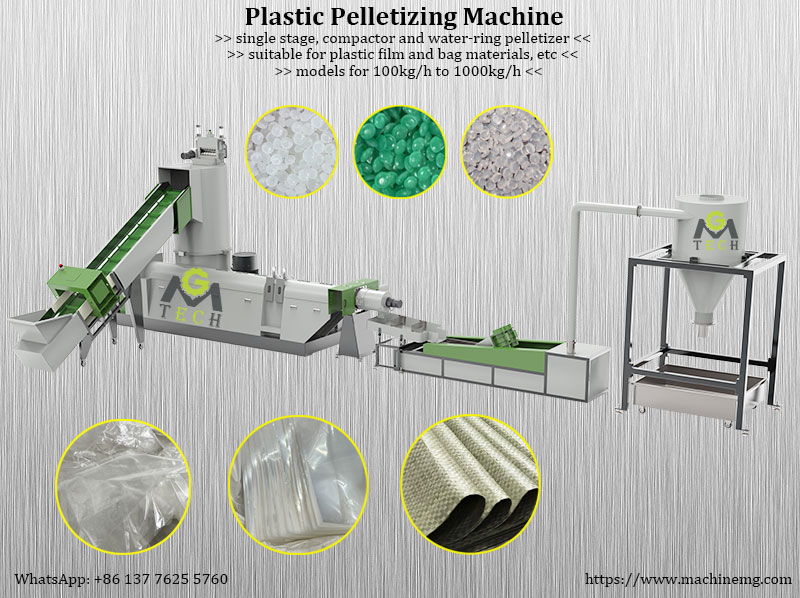
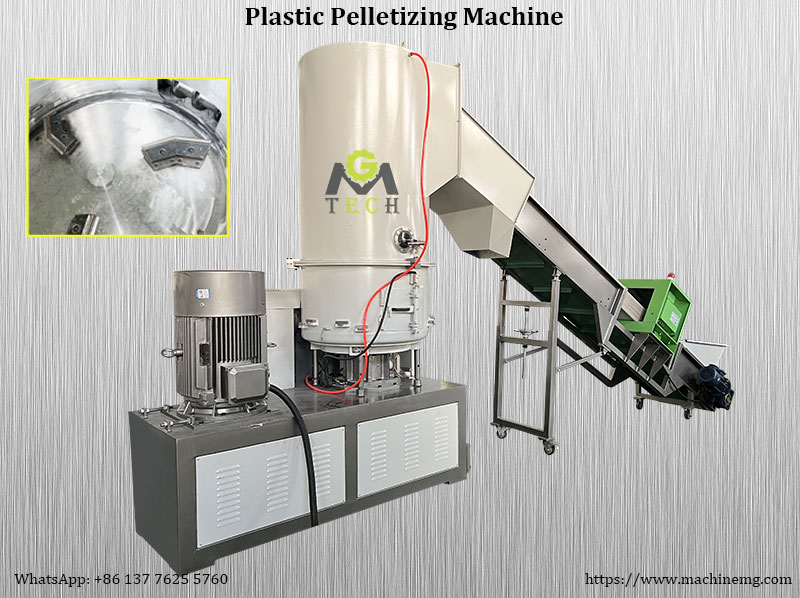
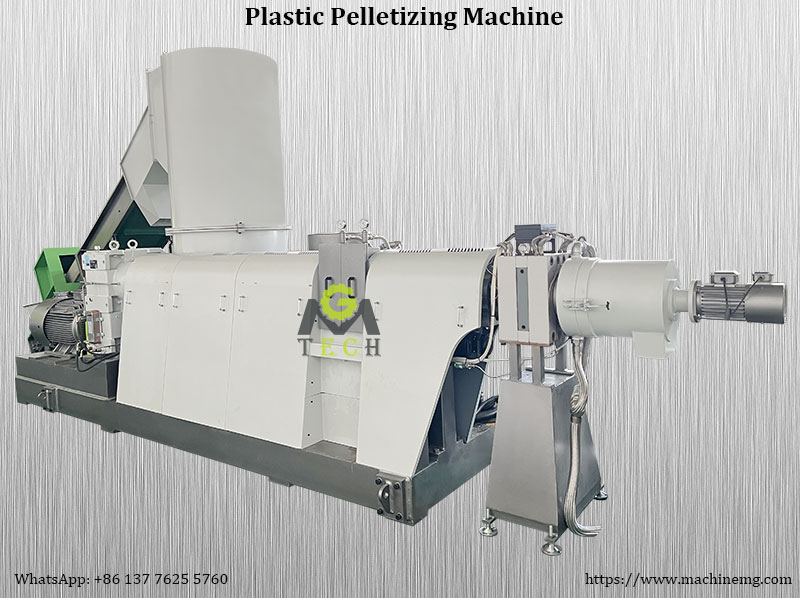
The Single Stage Water Ring Pelletizer with Compactor is a specialized plastic recycling machine designed to transform lightweight plastic film waste into high-quality and reusable pellets. This equipment combines compaction feeding, plasticizing extrusion, melt filtration, water-ring die-face cutting, and pellet drying into one continuous, space-efficient workflow .
Ideal Materials and Applications
This water ring pelletizer machine is particularly well-suited for the following materials and use cases:
1, PE Films: Agricultural film, packaging film, LDPE stretch wrap, HDPE bags.
2, PP Woven Bags: Part of PP Woven sacks, raffia, jumbo bag cuttings, non-woven fabric with lower MFI.
3, Production Trim: Film rolls, edge trims from manufacturing processes.
4, Clean Post-Industrial Scrap: In-house production waste from film and bag manufacturing. Etc.
The plastic pelletizer machine is best suited to relatively clean or lightly printed flexible PE streams that need densification and direct die-face pelletizing. For heavily contaminated materials, additional washing and separation equipment may be required upstream.
Flowchart of a compactor feeding type Single Stage Water Ring Pelletizing line
Film Waste → Compactor (Densification) → Extruder (Melting + Vacuum Degassing) → Screen Changer (Filtration) → Water-Ring Die-Face Cutting (Pelletizing) → Dewatering → Vibrating Sieve (Classification) → Air Drying → Storage/Packaging
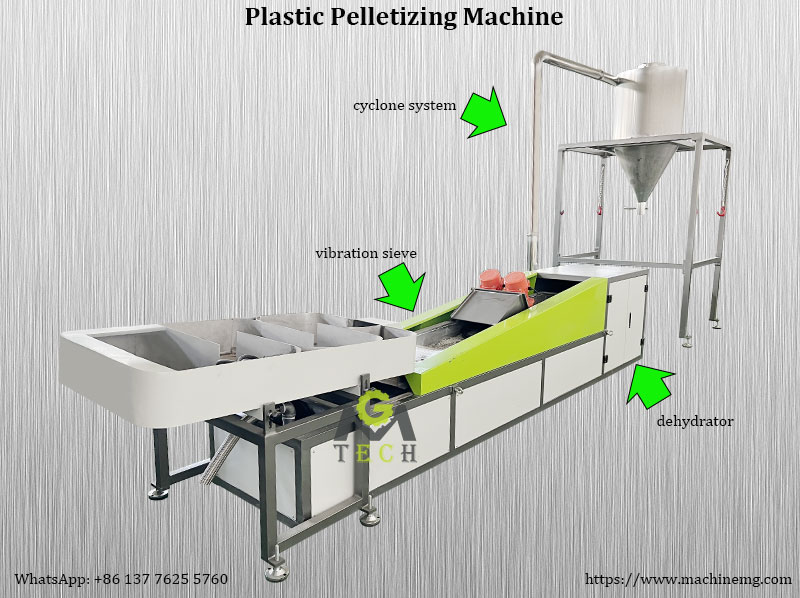
Note: Dewatering and Vibrating Sieve can be placed in either order depending on the real setup of the pelletizing line.
How the Single-Stage Pelletizing Process Works
The integrated pelletizing system operates through a streamlined sequence that addresses the unique challenges of film recycling:
Step 1: Compaction and Densification
Lightweight, fluffy film materials are fed into the compactor (also called agglomerator or cutter-compactor), where rotating blades cut, mix, and densify the material through high-speed friction. This process converts low-density film materials into semi-plasticized, compacted agglomerates that can be fed steadily into the extruder. The compactor eliminates the need for pre-shredding, significantly reducing labor and preprocessing costs .
Step 2: Plasticizing Extrusion and Degassing
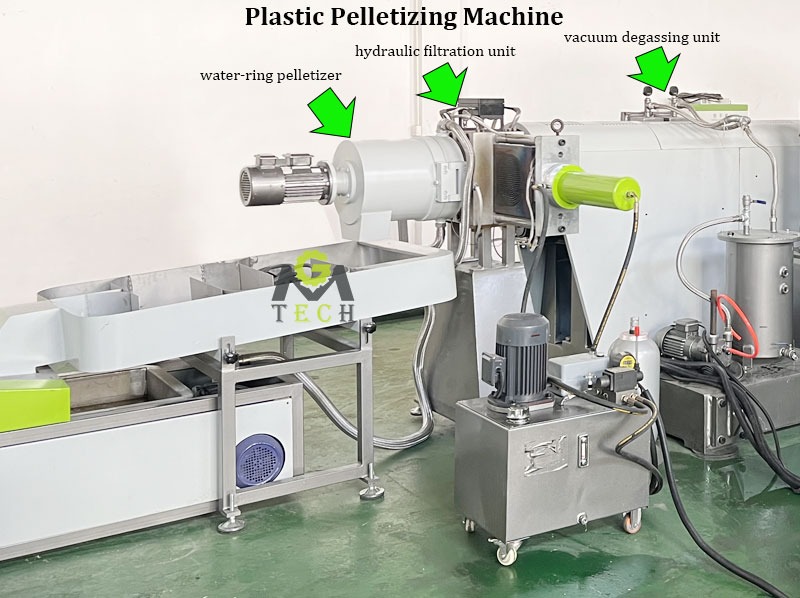
The densified material is melted and homogenized in the single-screw extruder. The extruder features a degassing vacuum vent system that effectively removes moisture, volatiles, and impurities from the melt, ensuring pellet quality .
Step 3: Melt Filtration
The molten polymer passes through a hydraulic screen changer that removes remaining contaminants and impurities. This filtration step protects pellet quality by ensuring only clean melt reaches the die face .
Step 4: Water-Ring Die-Face Cutting
The filtered melt exits through the die head, where rotating knives cut it into uniform pellets. The pellets are immediately quenched in the water ring chamber, preventing them from sticking together and ensuring consistent shape and size .
Step 5: Dewatering and Drying
The cooled pellets are separated from water through a dewatering machine, passed through a vibrating sieve to remove any imperfect pellets, and then dried using an air drying system before being conveyed to the storage hopper.
Why Choose a Single-Stage Water Ring Pelletizing System?
1, Integrated Compaction Solves the Film Feeding Problem
One of the biggest challenges in film recycling is the material's low bulk density, which makes consistent feeding difficult. The compactor addresses this by densifying the film before it enters the extruder, resulting in stable, high-capacity production. This single-stage configuration eliminates the need for more complex and costly multi-stage systems .
2, Superior Pellet Quality
The water-ring die-face cutting method produces uniform, smooth pellets with excellent handling characteristics for storage, bagging, and downstream reuse in film blowing, pipe and profile extrusion, or injection molding applications .
3, Space-Efficient Design
The integrated single-stage layout reduces transfer points, minimizes the equipment footprint, and simplifies operation compared to more segmented pelletizing arrangements . This makes it an ideal solution for recycling plants with limited floor space.
4, High Capacity with Low Energy Consumption
Modern single-stage water ring pelletizing systems can achieve throughputs ranging from 100 kg/h to over 1000 kg/h in MG machinery company, depending on the model configuration. Compared to older generation pelletizing systems, output has increased by up to 50~100% while energy consumption has decreased by 20~40% .
5, Cost-Effective Recycling Solution
By converting flexible plastic film scrap into reusable pellets, processors can significantly reduce raw material costs and build a more circular material workflow. The system offers a strong return on investment, particularly for processors handling consistent in-house production scrap.
Efficient Film Recycling Starts with the Right Pelletizing System
Key Advantages of the compactor feeding type Single Stage Water Ring Pelletizer
1. Integrated Compaction Solves Film Feeding Challenges
2. Single-Stage Design for Space and Cost Efficiency
3. Vacuum Degassing for Superior Pellet Quality
4. Water-Ring Die-Face Cutting Ensures Uniform Pellet Shape
5. High Throughput with Low Energy Consumption
6. Robust Melt Filtration Protects Pellet Quality
7. Efficient Dewatering and Drying System
8. Low Maintenance and Long Service Life
9. Versatile Material Handling Capabilities
10, PID or PLC Automated Control: Precision parameter control.
User-friendly interface with real-time monitoring and diagnostics
11. Environmentally Friendly Operation
12, CE certificate
Models of the compactor feeding type single-stage water-ring pelletizing line in MG Machinery company:
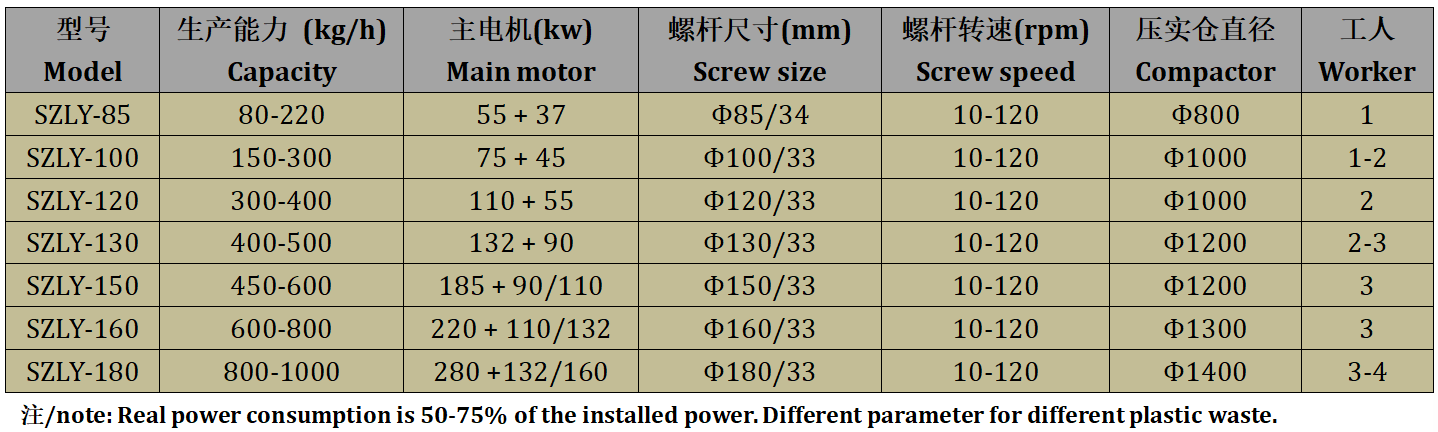
Customized pelletizers are available.
Why choose us?
1, we can provide the most suitable solution proposals according to your waste materials conditions and requirement.
2, professional design for machine flowchart and workshop layout according to your workshop area.
3, skilled and experienced workers for the machine manufacturing.
4, good testing for the machines before shipment.
5, shipment on time.
7, careful machine loading and fixing work in container.
8, dispatch engineer for after sale service in your company on time
9, training for machine and operation.
10, technology support.
etc.
Our plastic recycling machines and extrusion machines have been exported to many countries in the last 10 years, for example, Japan, South Korea, Vietnam, Indonesia, Thailand, Malaysia, India, Sri Lanka, Iran, UAE, Saudi Arabia, Israel, Iraq, Russia, Ukraine, Serbia, Georgia, Kenya, Ghana, Togo, Sudan, USA, Mexico, Chile, Peru, Bolivia, Argentina, Brazil, etc